


We work to reduce the environmental footprint of our operations and the equipment we provide. Our priorities include controlling energy use, lowering product power consumption, conserving resources and improving waste management.
We also engage customers, suppliers, partners and financial institutions on climate and circularity, and raise employee awareness of environmental practices. These efforts support the objectives of the Paris Agreement and help customers address their own environmental challenges.
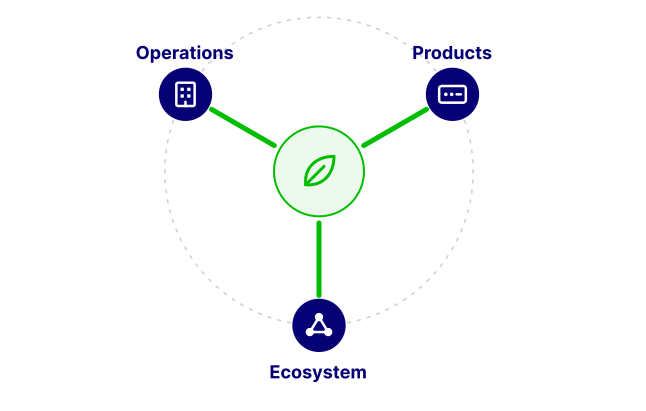

We aim to integrate eco-design practices into the way our equipment is developed and manufactured.
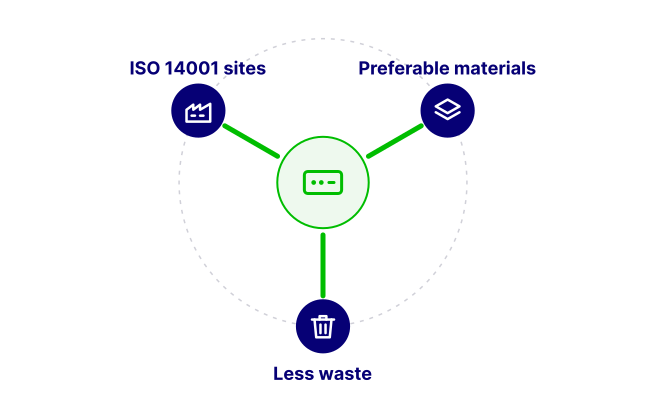
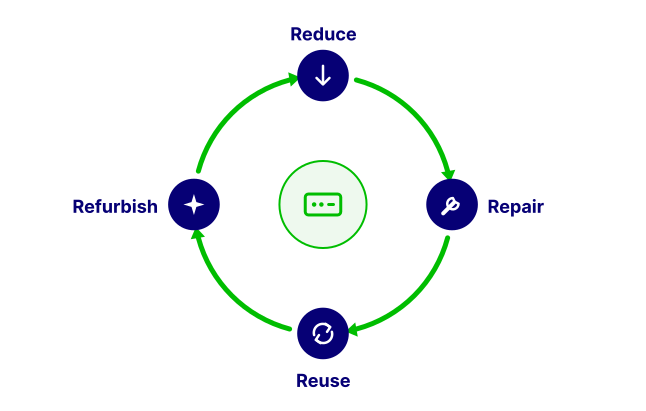
We seek to reduce resource use in products and packaging, prioritize recycled and recyclable materials wherever possible, and make products easier to dismantle, repair and reuse. We support refurbishment where feasible and work to extend product lifespans.
For our enterprise networking portfolio, we also provide environmental information forms, including cradle-to-grave or cradle-to-gate life cycle assessments (ISO 14040/14044), with a medium-term goal of extending this to all product lines, along with information on critical raw materials and conflict minerals contained or not in our products.
We seek to prevent, reduce and eliminate pollutants generated by our activities and value chain. Our commitments include compliance with applicable substance requirements under RoHS, WEEE and REACH, and extending pollution-control expectations to key suppliers through contracts and our Supplier Code of Conduct.
We are committed to responsible water management in manufacturing and our supply chain. Where applicable and feasible, we monitor consumption, wastewater generation and withdrawal sources at industrial sites. We require suppliers to assess water consumption and implement control measures across their operations.
We aim to prevent negative impacts on nature from our operations. Where suppliers have a direct impact on, or dependency on, biodiversity and ecosystems, we expect them to put plans in place to minimize it.